The Discharge Planner’s Guide to CalAIM Medical Respite at Empowering Potential Housing

Hospital discharge planning is a high-stakes balancing act. For social workers and discharge planners in acute care settings or Skilled Nursing Facilities (SNFs), the challenge isn't just finding a bed, it’s ensuring that the transition from clinical care to the community doesn't result in a "revolving door" of readmissions. This is particularly critical for individuals experiencing homelessness or those struggling with Substance Use Disorders (SUD).
The introduction of CalAIM (California Advancing and Innovating Medi-Cal) has transformed the landscape of post-acute care through Medical Respite, also known as Recuperative Care. At Empowering Potential Housing, we have designed our program to be the premier bridge for discharge planners who require more than just a place for their patients to sleep. We provide structured, drug- and alcohol-free housing with daily wellness check-ins, peer support, mentorship, and house accountability while medical and clinical needs are handled by outside providers.
This guide outlines how our program streamlines the CalAIM referral process and why our high standards for accountability make us the preferred partner for San Diego's leading referral sources.
Understanding Medical Respite Under CalAIM
Medical Respite is a transitional housing option for individuals who are too ill or frail to recover from a physical illness or injury on the streets or in a traditional shelter, but who no longer require the level of care provided in a hospital or SNF. Under the CalAIM framework, Medical Respite is categorized as a "Community Support", a cost-effective alternative to continued hospitalization.
At Empowering Potential Housing, our Medical Respite program is specifically tailored for Medi-Cal members experiencing homelessness. We recognize that medical stability is impossible without housing stability. By providing a safe, drug-free environment, we give residents a stable place to recover, attend follow-up appointments, stay connected to outside providers, and focus on the next step in their housing and recovery plan.
The Empowering Potential Housing Advantage: Accountability
For a discharge planner, the primary concern is patient safety and compliance. Many traditional sober living environments lack the structure and accountability needed for a stable transition. We differentiate ourselves through clear house expectations, daily wellness check-ins, peer support, and a drug- and alcohol-free environment.
Daily Wellness Check-ins
Accountability is the cornerstone of our model. Our staff performs daily wellness check-ins to support general wellbeing, house participation, and a safe living environment. These check-ins are non-clinical and help residents stay connected to structure, peer support, and outside providers when appropriate. These check-ins include:
- Checking in on general wellbeing and how the resident is adjusting to the house routine.
- Encouraging participation in house expectations, recovery activities, and follow-up appointments with outside providers.
- Noticing safety concerns or signs that a resident may need additional support and encouraging connection to the appropriate outside provider or emergency resource when needed.
High Standards for Residential Recovery
We believe that "changing playmates and playgrounds" is essential for lasting success. Unlike many low-barrier shelters, we maintain a drug and alcohol-free environment. This structure is not about being restrictive; it is about creating a sanctuary where recovery can actually take place. By setting high standards, we foster an atmosphere of discipline and personal growth, which is often the missing piece in traditional homeless services.

Streamlining the Referral Process: A Partner for Social Workers
We know that social workers are often under immense pressure to discharge patients quickly to free up acute care beds. A fragmented referral process is a barrier to efficient care. Empowering Potential Housing has optimized our intake system to be as seamless as possible for our referral partners.
How to Refer
Discharge planners can initiate a referral by visiting our Recuperative Care page or by filling out our official qualification forms. We coordinate with Managed Care Plans (MCPs) and referral partners as eligibility and authorization decisions are determined by health plans and other authorized entities, reducing the administrative burden on hospital staff.
Our team understands the urgency of discharge timelines and the importance of a stable placement. Referral partners and health plans determine eligibility and authorizations. When you partner with us, you are not just finding a bed; you are securing structured housing with accountability, peer support, and a safe environment that supports the next step after discharge.
A Supportive Community Built on Peer Mentorship
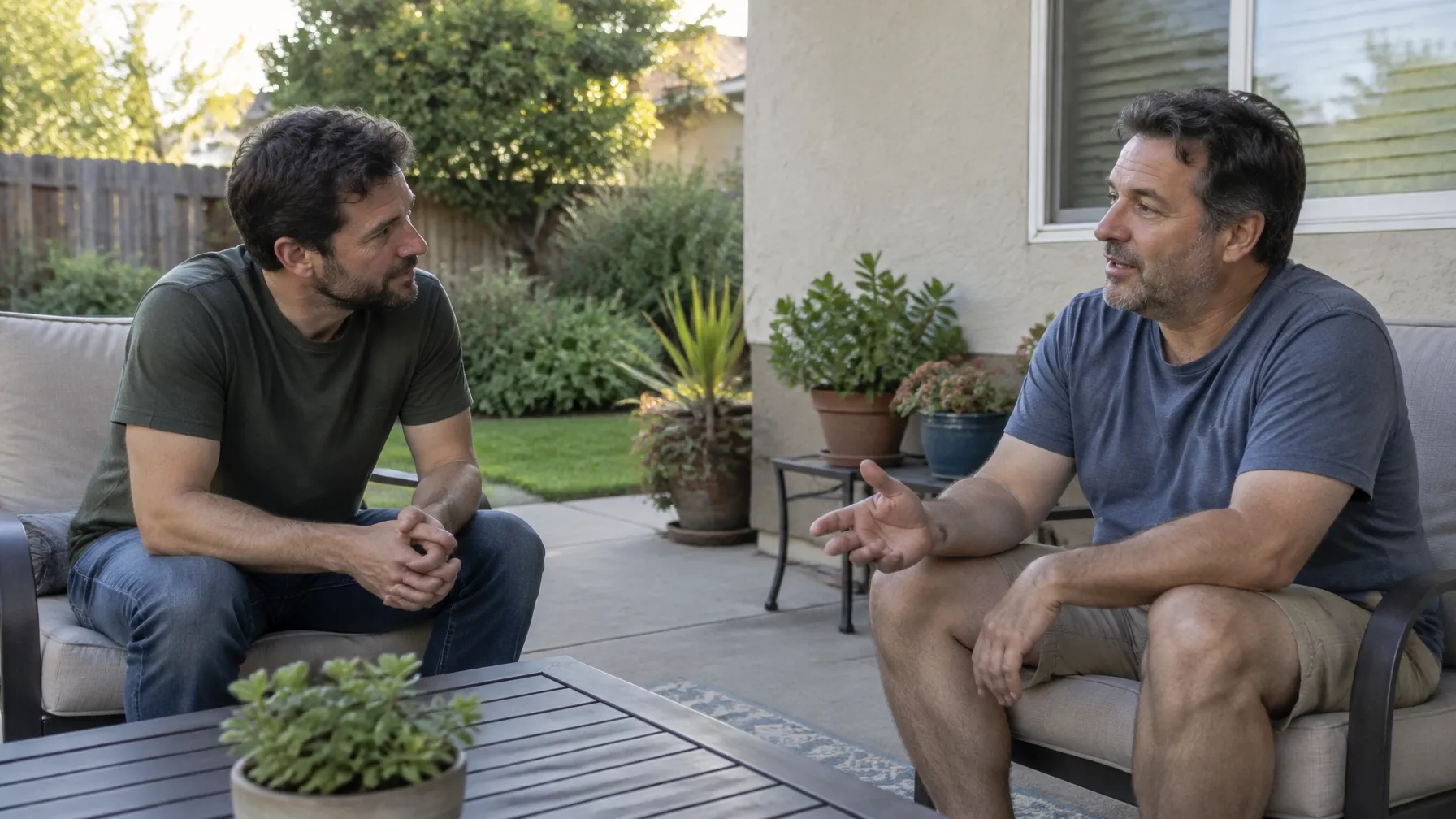
Medical recovery does not happen in a vacuum. At Empowering Potential Housing, we leverage a community-based approach. Outside providers handle medical needs, while our peer-based mentorship and structured housing address the human element of recovery.
Residents are encouraged to engage with various recovery pathways, whether it be AA, NA, SMART Recovery, or Celebrate Recovery. This flexibility allows individuals to choose the path that resonates with them, while our structured environment provides the "stepping stone" they need to transition back into independent living.
Reducing Readmissions Through Stable Transitions
The ultimate goal of any discharge planner is a successful transition. When a patient is discharged to a chaotic or unstable environment, the likelihood of an ER visit within 30 days sky-rockets. Empowering Potential Housing mitigates this risk by providing:
- Stable Foundation: A clean, organized, and supportive living space.
- Housing Stability: Structured, drug- and alcohol-free housing with accountability, peer support, and daily wellness check-ins.
- Long-Term Strategy: We don't just look at the 90-day respite period; we focus on the foundation for long-term recovery goals.
Our residences are designed to feel like homes, not institutions. We provide high-speed internet and all essential utilities, ensuring that residents can stay connected to their medical providers and social services without the stress of managing household logistics.
The Path Forward: Partnering for Better Outcomes
A "good" recovery residence is one that prioritizes the patient's long-term health over short-term convenience. At Empowering Potential Housing, we believe that structure is a form of care. We do not provide medical monitoring, clinical staffing, nursing, or on-site medical treatment. For hospital social workers and SNF discharge planners, we offer a reliable, professional, and structured housing solution to the complexities of CalAIM Medical Respite.
We invite you to tour our facilities or speak with our intake coordinators to learn more about how we can support your most vulnerable patients. Let us help you ensure that your next discharge is the start of a lasting success story.
Contact Us Today
If you are a social worker or discharge planner looking for a high-standard Medical Respite placement in San Diego, please reach out to us. We are here to help you navigate the CalAIM process and provide your patients with the stable foundation they deserve.
Empowering Potential Housing
Phone: 619-500-3987
Email: empoweringpotentialhousing@gmail.com
Website: empoweringpotentialhousing.com
Referral Forms: Refer a Patient