
Your First 30 Days in a Recovery Residence: What to Expect and How to Make Them Count

Entering a recovery residence is a major step. It gives you a stable place to live while you practice the daily behaviors that support long-term recovery. The first 30 days may feel unfamiliar, highly structured, and sometimes uncomfortable. That is normal.
A good recovery residence is not simply a place to sleep without drugs or alcohol. It is a stepping stone between treatment, homelessness, unstable housing, or an old lifestyle and a healthier, more accountable life. The goal is to help you change your playmates and playgrounds, build reliable routines, and develop the skills needed for lasting recovery.
At Empowering Potential Housing, residents receive a structured, drug- and alcohol-free living environment with community support, mentorship, all utilities, and high-speed internet included in the monthly rate. Here is how to prepare for your first month and make it count.
Move-In Day: Bring What Supports Recovery
Move-in day usually includes an orientation, paperwork, a tour of the house, and an explanation of expectations. You may review house rules, curfew, chores, meeting requirements, visitor policies, medication procedures, and sign-in and sign-out requirements.
Arrive prepared with practical items rather than unnecessary belongings. Your packing list should typically include:
- Government-issued identification and important documents
- Prescribed medications in their original pharmacy containers
- Comfortable clothing for work, meetings, and daily activities
- Toiletries, towels, and personal hygiene supplies
- Bedding, if the residence does not provide it
- A journal, recovery literature, or other healthy personal activities
- Chargers, headphones, and other essential electronics
- Work or interview clothing
- Contact information for supportive family members, counselors, sponsors, or treatment providers
Ask the residence in advance about prohibited items. Some homes restrict certain medications, drug paraphernalia, weapons, alcohol-related items, or valuables. Do not wait until arrival to learn the rules.
You should also be ready to complete an inventory of your belongings and any required screening. These procedures are not personal accusations. They protect the recovery environment and establish clear expectations from the beginning.
Empowering Potential Housing offers furnished shared-bedroom homes, a $100 move-in fee, and affordable monthly rates. You can review current housing information through the men’s sober living house and women’s sober living house pages.
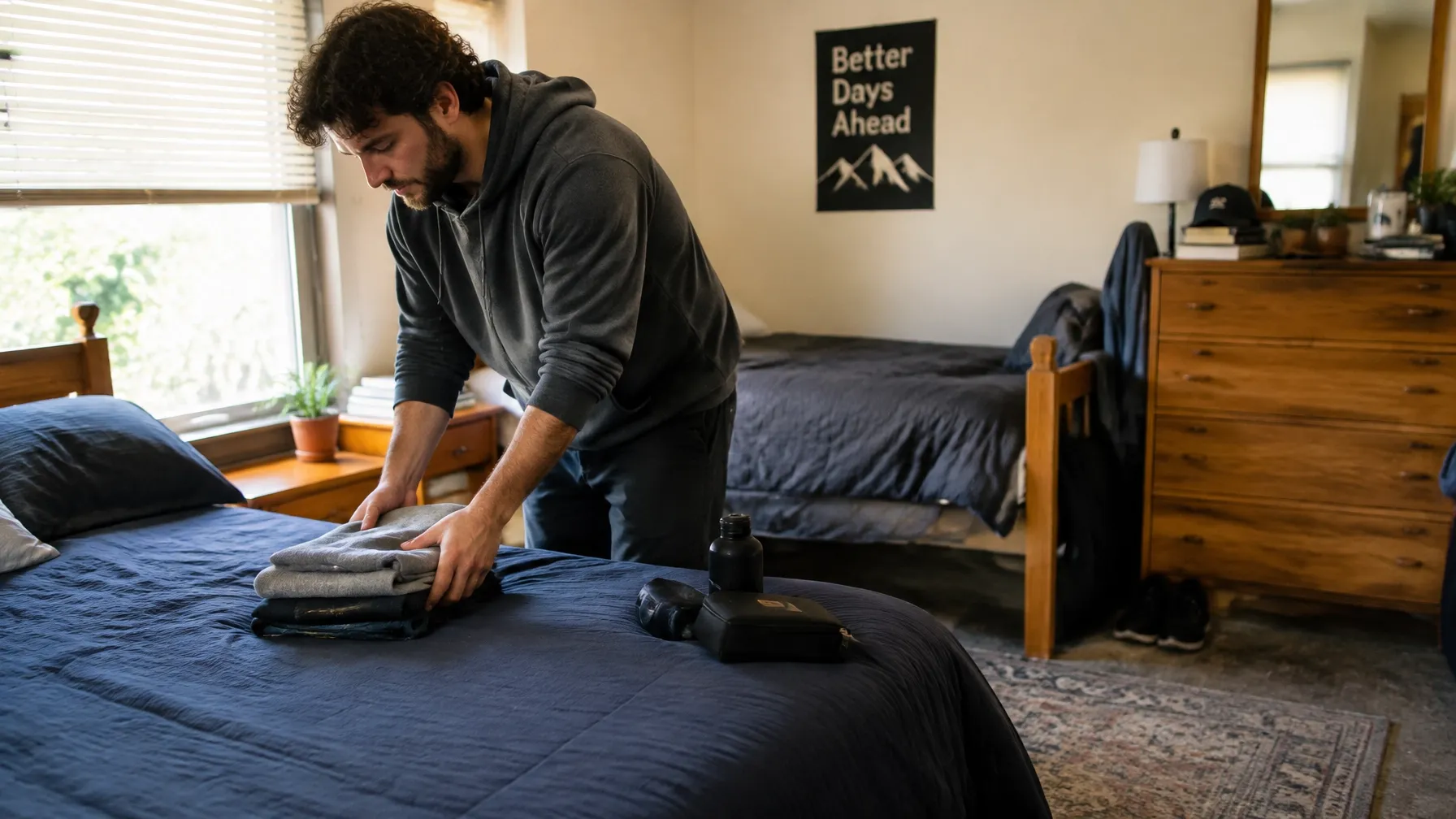
House Rules Create Safety and Accountability
The first 30 days are often the most structured period of your stay. That structure exists for a reason. Early recovery requires fewer opportunities for impulsive decisions, isolation, and contact with people or places connected to substance use.
Expect rules that may include:
- A nightly curfew
- Signing in and out when leaving the house
- Approved schedules for work, school, treatment, or meetings
- Restrictions on overnight guests or outside passes
- Random drug and alcohol testing
- Attendance at house meetings or recovery meetings
- Assigned chores
- Respectful communication with staff and housemates
- Requirements to report cravings, conflicts, or rule concerns
Your residence will explain its specific policies during orientation. Do not assume that another sober living home’s rules apply to yours.
Curfew is not meant to control every part of your life. It helps you protect your evenings, reduce exposure to high-risk situations, and remain connected to the community. Chores are not busywork. They teach consistency, responsibility, and respect for shared space. Sign-in and sign-out procedures create transparency, which is one of the foundations of accountability.
A good sober living home applies rules consistently and explains their purpose. A bad sober living home may ignore violations, tolerate substance use, or allow chaos to develop. High standards matter because your environment influences your decisions.
The Daily Rhythm: Meetings, Chores, Work, and Rest
Recovery becomes more manageable when your days have a dependable rhythm. Your schedule may change based on employment, outpatient treatment, school, or other responsibilities, but the basic pattern remains consistent.
A typical day may include:
- Waking up at a reasonable, consistent time
- Making your bed and maintaining your personal space
- Completing assigned chores
- Going to work, school, treatment, or job searching
- Attending a recovery meeting or support activity
- Checking in with a mentor, house manager, or peer
- Eating regular meals and taking care of personal health
- Returning to the residence before curfew
- Preparing for the next day
You may be expected to attend recovery meetings regularly, especially during your first month. Empowering Potential Housing supports different recovery paths, including:
- Alcoholics Anonymous, or AA
- Narcotics Anonymous, or NA
- SMART Recovery
- Refuge Recovery
- Celebrate Recovery
You do not have to force yourself into a program that does not align with your needs. You do need to participate actively in a recovery plan and remain willing to learn. Different programs use different language and tools, but all can help you develop honesty, self-awareness, coping skills, and accountability.
The residence itself is not a replacement for medical or clinical treatment. If you are participating in outpatient counseling, medication-assisted treatment, psychiatric care, or another program, build those appointments into your schedule and communicate with your providers.
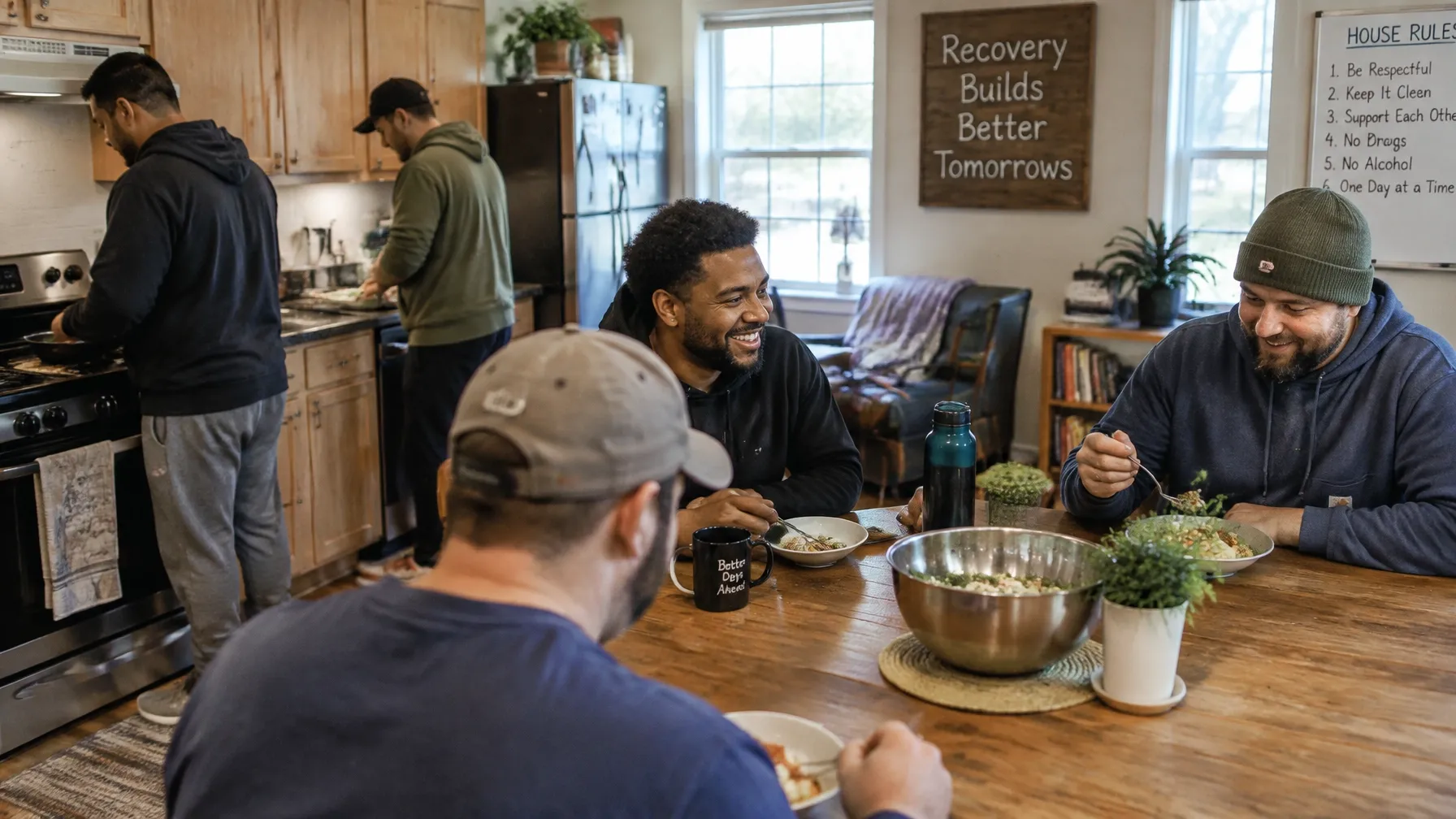
Building Relationships with Housemates and Mentors
Living with other people in recovery gives you daily opportunities to practice communication, boundaries, patience, and responsibility. You may not become close friends with every housemate. That is not the goal. The goal is to become a respectful and dependable member of the community.
Start with simple actions:
- Introduce yourself and learn people’s names
- Participate in house meetings
- Complete your chores without repeated reminders
- Keep shared areas clean
- Respect quiet hours and personal boundaries
- Avoid gossip, manipulation, and unnecessary conflict
- Offer help without trying to manage another resident’s recovery
- Ask questions when you are unsure about expectations
Mentorship can help you adjust faster. A mentor or experienced peer can explain the house routine, help you find meetings, and offer perspective when you are frustrated. Accept guidance without treating it as criticism. Accountability is not rejection. It is a practical form of support.
You should also identify at least two or three people you can contact when you are struggling. Recovery becomes more stable when you stop handling every problem alone.
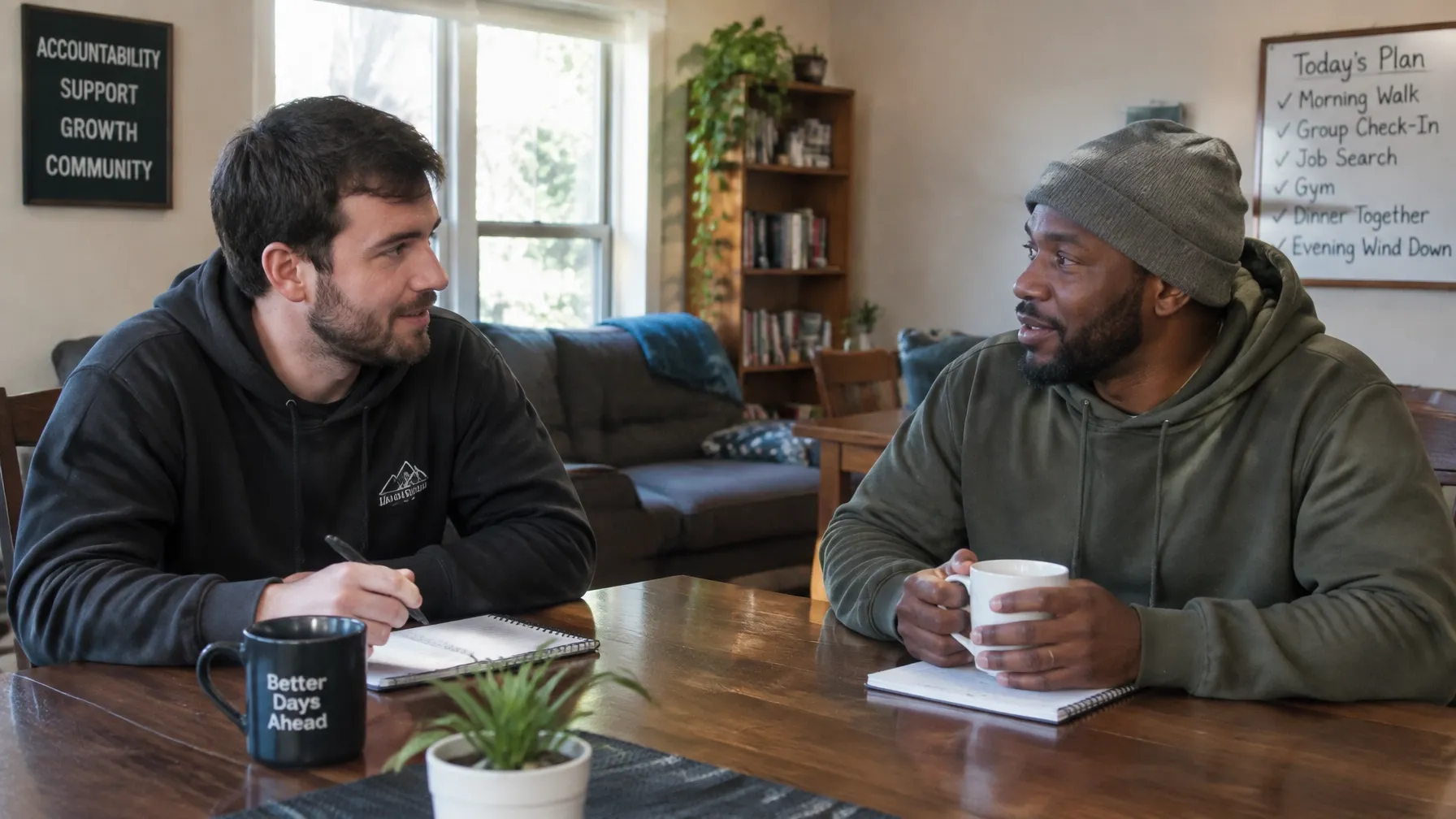
Handling Early Triggers and Cravings
Triggers are people, places, feelings, situations, or memories that increase the urge to drink or use drugs. In your first 30 days, common triggers may include loneliness, boredom, stress, conflict, financial concerns, anxiety, anger, or contact with old friends.
A craving is an urge. It is not a command. You do not have to act on it, but you must take it seriously.
When a craving appears:
- Tell someone promptly. Speak with a mentor, house manager, sponsor, counselor, or trusted housemate.
- Change your environment. Leave the room, take a walk with another resident, or go to a meeting.
- Avoid making major decisions while emotionally activated.
- Use simple grounding strategies, such as slow breathing, drinking water, journaling, or identifying what you can see and hear around you.
- Remove access to people, places, and items connected to substance use.
- Follow your recovery plan instead of relying on willpower alone.
Do not hide a craving because you are embarrassed. Early disclosure gives the community a chance to help before the situation becomes a crisis. If you do use, experience a medical emergency, or feel at risk of harming yourself, notify staff and seek immediate professional or emergency assistance.
Why the First 30 Days Set the Tone
The first month does not determine your entire future, but it strongly influences your direction. During these weeks, you are learning whether you will follow through when no one is forcing you, accept correction without leaving, and choose recovery even when it is inconvenient.
Your first 30 days help establish:
- A regular sleep and activity schedule
- Consistent meeting attendance
- Healthy relationships
- A pattern of honest communication
- Confidence in managing cravings
- Better awareness of personal triggers
- A realistic plan for employment, treatment, finances, and continued housing
Think of the first month as laying the foundation. You are not expected to have everything solved. You are expected to show up, follow the rules, ask for help, and remain willing to grow.
Seven Ways to Make Your First Month Count
1. Follow the schedule before you feel motivated
Motivation changes. Routine gives you something dependable to follow when motivation is low.
2. Treat every rule as a recovery tool
Curfew, chores, testing, and check-ins protect your progress. Do not wait until you understand every rule before cooperating with it.
3. Be honest early
Tell someone about cravings, conflict, mental health concerns, or difficulty adjusting. Problems are easier to address when they are small.
4. Choose connection over isolation
Spend time in appropriate shared spaces, attend meetings, and build relationships with people who support sobriety.
5. Change your playmates and playgrounds
Avoid former using environments and relationships that repeatedly pulled you away from your goals. A new life requires new patterns.
6. Track your progress
Use a journal or calendar to record meetings, chores, job applications, appointments, cravings, and personal goals. Visible progress builds confidence.
7. Focus on the next right action
You may eventually need to plan for work, school, independent housing, family relationships, and long-term care. Those goals matter. Still, your first responsibility is today’s recovery action.
Begin with a Stable Place to Recover
A recovery residence gives you the opportunity to practice sobriety in a safe, structured, community-focused setting. The first 30 days may challenge your independence, but they can also give you the stability needed to rebuild it.
Empowering Potential Housing provides affordable recovery-oriented homes with all utilities and high-speed internet included, a straightforward application process, mentorship, peer accountability, and flexibility to support AA, NA, SMART Recovery, Refuge Recovery, or Celebrate Recovery.
To ask questions, confirm availability, or schedule a move-in conversation, call 619-500-3987. You can also apply online or email empoweringpotentialhousing@gmail.com. A stable first step can become the foundation for personal growth and lasting recovery.