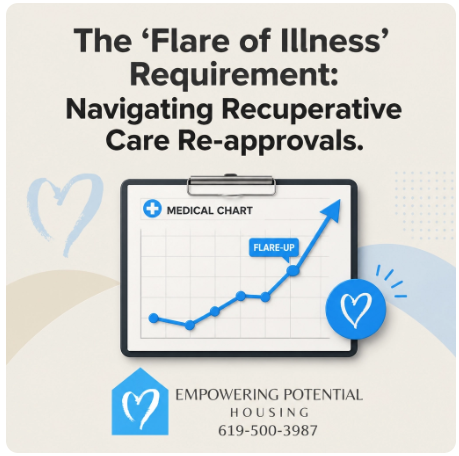
Re-Qualifying for CalAIM Housing: Understanding the 'Flare of Illness' Rule
For hospital social workers and discharge planners, navigating the CalAIM (California Advancing and Innovating Medi-Cal) ecosystem can often feel like aiming at a moving target. You’ve secured the initial authorization for Recuperative Care, and your client is finally in a stable environment. But as that 30-day or 90-day window closes, the "denial" letters start arriving.
The State has recently clarified its guidance to payers like Molina Healthcare, introducing a stricter interpretation of what constitutes a "medical necessity" for a new bucket of housing authorization. The keyword every social worker needs to know? The Flare of Illness.
At Empowering Potential Housing, we see the real-world impact of these policy shifts every day. Understanding the difference between a "chronic condition" and a "flare of illness" is the difference between a client continuing their recovery or returning to the streets. This guide is designed to help you navigate these specific rules to prevent gaps in housing and ensure your clients get the full support they deserve.
The Policy Shift: Why 'Same Old' Doesn't Work
In the early days of CalAIM implementation, many social workers found success in renewing authorizations by simply citing the client’s original diagnosis. If they were homeless and had a Substance Use Disorder (SUD) or a serious mental illness (SMI) on day one, surely they still needed housing on day 60.
However, the State’s latest guidance to managed care plans like Molina emphasizes that Recuperative Care is short-term, acute intervention. It is not meant to be a permanent housing solution. To justify a new authorization "bucket," the plan now looks for a dynamic change in the member’s clinical status.
Essentially, the member must be recovering from a new illness or a significant flare of an existing one. Without this "flare of illness," payers view the situation as a chronic social issue (homelessness) rather than a medical necessity that justifies high-cost clinical housing like Medical Respite.
What Qualifies as a 'Flare of Illness'?
A "flare" is defined as a sudden exacerbation of symptoms or a change in the treatment plan that requires residential stability and increased support from outside providers. When you are submitting for a re-authorization, your documentation must highlight a documented medical trigger that moves the client from "maintenance" back into "acute recovery."
1. Medication Titration and Stabilization
One of the most effective ways to demonstrate a flare of illness is through a change in pharmacological treatment. If a member’s condition has become unstable: perhaps due to a previous medication failure: and they are starting a new, potent psychiatric or medical regimen, they may need the structured environment of a recovery-oriented home while outside medical providers monitor side effects and efficacy and the home provides structure and daily wellness check-ins.
Example: A member with Bipolar Disorder who has been non-responsive to their current meds is started on Seroquel or a similar antipsychotic. The transition period can create a need for a stable, recovery-oriented living environment with daily wellness check-ins, peer support, and strong house structure. This "medication change" is a concrete clinical factor that can help justify continued medical respite.
2. Acute Exacerbation of Chronic Conditions
Having a chronic condition like COPD or Congestive Heart Failure is often not enough for a re-auth. However, if that member has an acute exacerbation: a "flare": that requires new nebulizer treatments, oxygen adjustments, or intensive wound care, the medical necessity is renewed.
3. New Clinical Diagnoses
If, during their stay, a client is diagnosed with a secondary condition that complicates their primary recovery (e.g., a person in SUD recovery discovering an underlying infectious disease or a significant mental health diagnosis), this "new illness" creates a fresh window for authorization.
The 'Non-Compliance' Trap: Why Relapse Isn't Always Enough
This is where the distinction becomes firm: Chronic non-compliance is not a flare of illness.
Payers are increasingly pushing back on re-authorizations where the only justification is that the member "refused to follow the program" or "is at risk of relapse." From a clinical billing perspective, a simple relapse of SUD, while devastating to the individual’s progress, is often viewed as the "expected baseline" for a chronic condition rather than a new medical emergency.
To get a re-auth after a relapse, you must document the consequences of that relapse that create a new medical need. For example:
- Did the relapse result in a new physical injury?
- Did it lead to an acute withdrawal episode that required additional medical follow-up?
- Did it trigger a "new illness" flare (like a skin infection or respiratory issue)?
Without these documented medical factors, the payer will likely suggest that the member belongs in a self-pay recovery residence or a standard sober living environment rather than a state-funded medical respite bed.
Strategies for Social Workers: How to Get the 'Yes'
When you are advocating for your client, your language must mirror the "authoritative and educational" tone required by clinical reviewers. Here are three tips for your next authorization request:
1. Focus on 'Medical Stability'
Stop using "housing instability" as your primary argument. Instead, use phrases like: "The member remains medically unstable due to an acute flare of [Condition] and needs a structured recovery environment with daily wellness check-ins to reduce the risk of immediate re-hospitalization."
2. Document the 'Playmates and Playgrounds' Risk
In recovery circles, we talk about "changing playmates and playgrounds." In your documentation, frame the transition back to the street not just as a lack of a bed, but as an immediate destabilizing factor that will worsen the current "flare of illness."
3. Highlight the Mentorship and Oversight
At Empowering Potential Housing, our medical respite services include daily wellness check-ins, peer support, mentorship, and structured drug- and alcohol-free housing, with clinical and medical needs handled by outside providers. When you apply, emphasize that the member cannot self-manage their "flare" in a traditional shelter or on the street. They need the peer-based community and supportive mentors that only a structured home provides.
Avoiding the Housing Gap: The Safety Net
Sometimes, despite your best efforts, the "flare of illness" window closes. This is a dangerous time for a client. If the state stops paying, many providers simply discharge the individual back to homelessness.
At Empowering Potential Housing, we believe in a "stepping stone" approach. If a client no longer qualifies for the Medical Respite bucket but isn't ready for independent living, we offer high-standard Recovery Residences.
Our residences are:
- Affordable: rates range from $800–$1,200 per month depending on the residence, plus a one-time $100 move-in fee, with utilities and high-speed internet included.
- Accessible: a straightforward application process.
- Structured: Safe, drug and alcohol-free environments with a focus on accountability and community.
By having this secondary option ready, you can transition your client from a clinical "respite" status to a "self-pay" recovery status without them ever losing their bed or their community. This continuity is the key to lasting recovery.
The Power of Community and Structure
Recovery isn't just about medicine; it's about the environment. A good sober living home provides more than four walls; it provides a framework for a new life. While the State focus on "flares of illness" for billing purposes, we focus on "empowering potential" for life purposes.
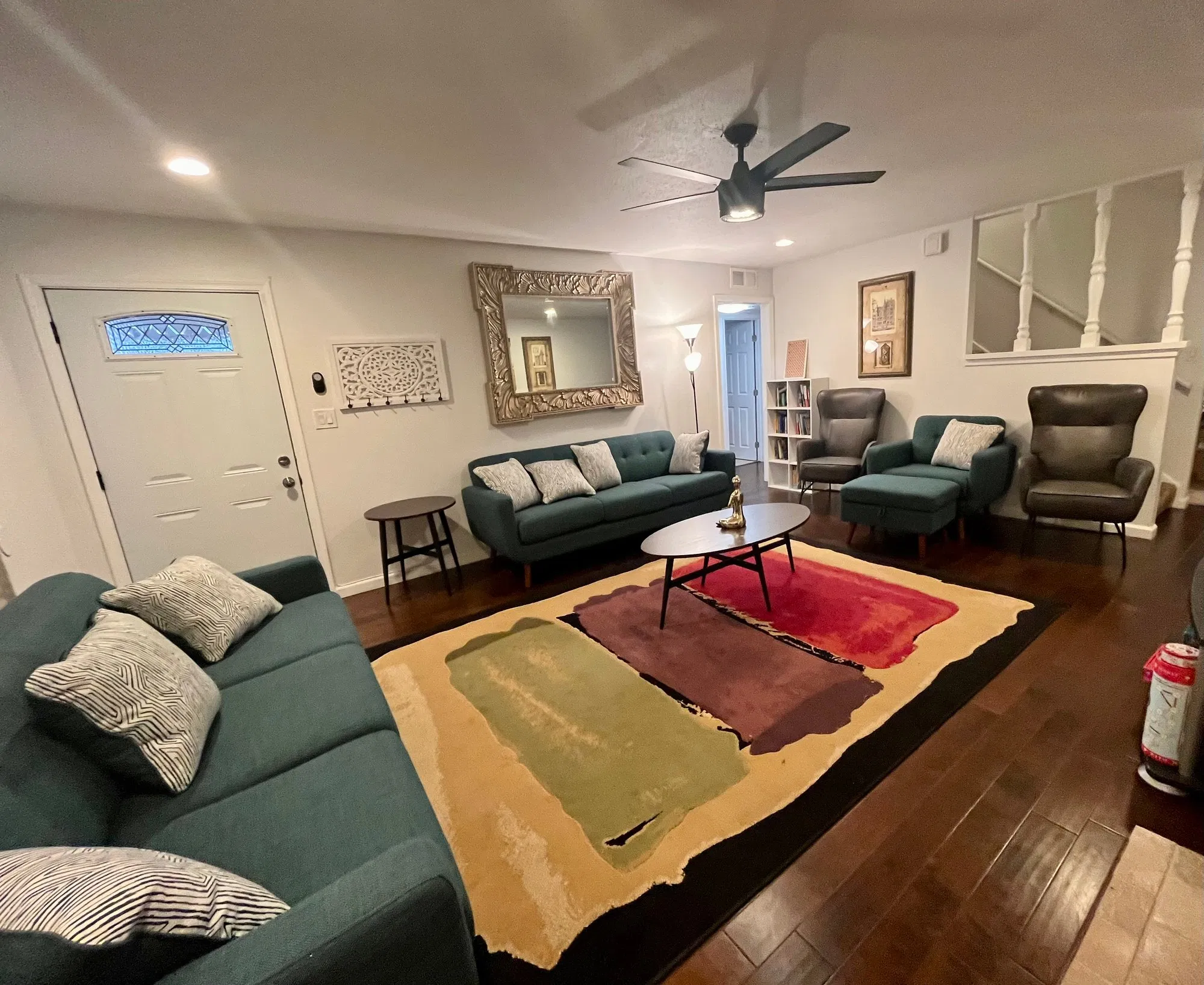
Whether it's our Men's Home in Serra Mesa or our Women's Recovery Residence, we maintain the highest standards of residential recovery. We don't just provide a place to sleep; we provide a community that fosters personal growth and accountability.
Conclusion: Let Us Help You Navigate the System
Navigating CalAIM authorizations is a heavy lift for any social worker. You are fighting for your clients' lives every day, and the rules shouldn't be a barrier to their success.
If you are struggling to get a client re-qualified or if you need to place an unhoused patient who needs medical respite, reach out to us. We understand the "flare of illness" requirements, and we can help you build the documentation needed for a successful referral.
Ready to place a client or have questions about our CalAIM partnerships? Call us today at 619-500-3987 or visit our Recuperative Care page to start the process. Let’s work together to build a stable foundation for your clients’ long-term recovery.
Related resources: Review the medical respite referral path, recuperative care overview, and sober living cost information.