The Hospital Social Worker’s Guide to CalAIM Medical Respite in California
#
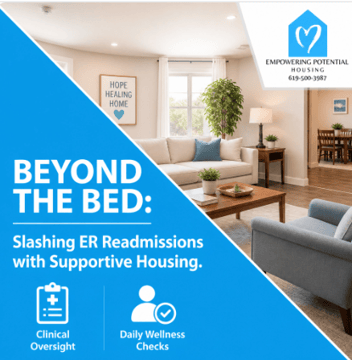
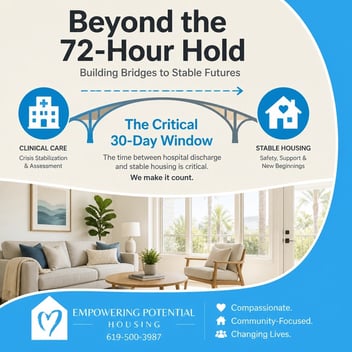
Discharge planning is often the most challenging part of a hospital social worker’s day, especially when the patient is experiencing homelessness. You are tasked with finding a "safe discharge" for someone who is medically stable enough to leave the hospital but far too vulnerable to return to the streets. Without a proper bridge, these individuals often end up back in the emergency room within 72 hours: a frustrating cycle for both the provider and the patient.
CalAIM (California Advancing and Innovating Medi-Cal) has introduced a transformative solution: **Medical Respite**, also known as Recuperative Care. At [Empowering Potential Housing](https://empoweringpotentialhousing.com), we serve as a vital partner for hospital social workers and Skilled Nursing Facility (SNF) staff, providing the high-standard residential recovery necessary to break the cycle of homelessness and hospital readmission.
What is CalAIM Medical Respite?
Medical Respite is a transitional housing option specifically designed for individuals who no longer require acute hospital care but still need a stable environment to recover from an illness or injury. It is not a hospital, and it is not a traditional shelter; it is a **stepping stone** between clinical care and independent living.
Under CalAIM, Medical Respite is classified as a "Community Support" service. It provides short-term residential care for individuals who are experiencing homelessness and have a medical need that would be exacerbated by living on the street or in an unstable environment.
For the hospital social worker, this service is a lifeline. It ensures that your patient has a bed, meals, and oversight while they complete their recovery, allowing you to meet discharge requirements with confidence.
Why Social Workers Choose Empowering Potential Housing
While several organizations offer recuperative care, the quality of the environment matters. A "bad" sober living or respite home can be chaotic, lacked oversight, and ultimately lead to a relapse or a medical setback. A "good" medical respite program, however, provides the discipline and structure necessary for long-term success.
At Empowering Potential Housing, we pride ourselves on maintaining high standards of residential recovery. Here is how we support your discharge planning:
1. Daily Wellness Check-Ins
Accountability is the cornerstone of our program. Our staff performs daily wellness check-ins with every resident. These aren't just "roll calls": they are opportunities to monitor a resident’s physical health, mental state, and adherence to their recovery goals. This consistent oversight ensures that minor issues are addressed before they become medical emergencies.
Clinical Oversight
We understand that medical respite for the homeless requires a bridge to clinical care. Our program includes clinical oversight to ensure that residents are managing their medications correctly and attending follow-up appointments. We coordinate with the patient’s existing medical team to provide a seamless transition from the hospital bed to our front door.
3. A Drug and Alcohol-Free Environment
Recovery cannot happen in a vacuum. We provide a structured, drug and alcohol-free environment. This is non-negotiable. By "changing playmates and playgrounds," we give residents the best possible chance at maintaining both their physical health and their sobriety.
The goal of medical respite is not just to heal a physical wound; it is to build a stable foundation for the future. This is where recovery support services become essential.
Once a resident is medically stable, they have the option to transition into our Recovery Residences. These homes are designed for long-term growth and accountability. We support various paths to recovery, including:
* Alcoholics Anonymous (AA) and Narcotics Anonymous (NA)
* SMART Recovery
* Refuge Recovery
* Celebrate Recovery
Our mentorship program pairs residents with peer-based community members who foster personal growth and accountability. We don't just give them a place to stay; we give them a community to belong to.
Streamlining Your Discharge Process
We know that social workers are under immense pressure to reduce "length of stay" while ensuring "safe discharge." Empowering Potential Housing is here to make that process easier.
When you refer a patient to us, you are placing them in a supportive housing environment that prioritizes their dignity and their recovery. We handle the structure so you can focus on the next person on your list.
How to Refer a Patient
If you have a patient who is Medi-Cal eligible and experiencing homelessness, they may qualify for our CalAIM Medical Respite services. We also accept self-pay residents who are looking for a safe, recovery-oriented home.
**The referral process is straightforward:**
1. **Contact Us:** Reach out to our team to check current bed availability.
2. **Assessment:** We conduct a brief screening to ensure our environment is the right fit for the patient's medical and recovery needs.
3. **Intake:** Once approved, we coordinate the intake to ensure a smooth transition from your facility.
Conclusion: A Partner in Potential
The transition from a hospital bed back to the community is a critical moment. For those experiencing homelessness, it is often the moment where everything falls apart. By utilizing CalAIM Medical Respite, you are giving your patients a chance to recover with dignity, structure, and a clear path toward a better life.
At Empowering Potential Housing, we believe in the "potential" of every individual who walks through our doors. We are committed to being the highest standard in residential recovery, providing the stability and clinical oversight necessary for lasting change.
Are you a hospital social worker or SNF discharge planner looking for a reliable medical respite partner in California?
Contact Rachel Romero today at (619) 500-3987 or visit our contact page to learn more about our referral process and how we can help you provide a safe, supportive discharge for your patients.